← Projects
Project · 2019 – 2024

IRIS-2 — Image Recording Instrument for Sunrise

My role
Project manager · software
Topics
project managementsoftwarespace instrumentation
Links
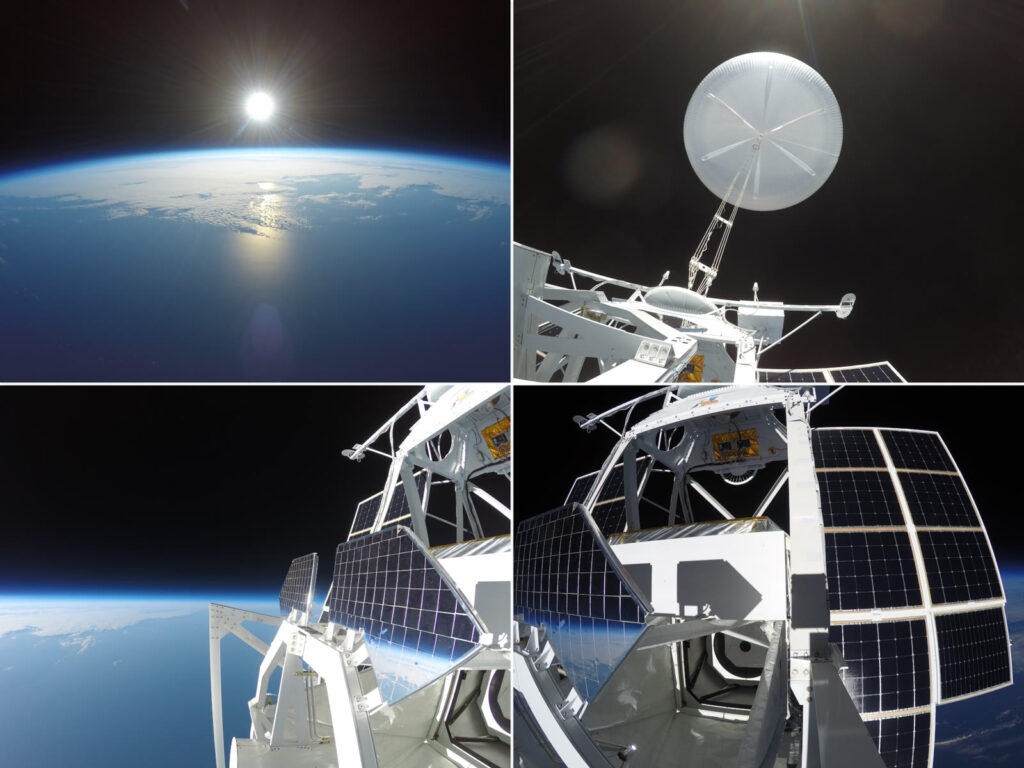
Sunrise III in flight, filmed by the IRIS-2 cameras

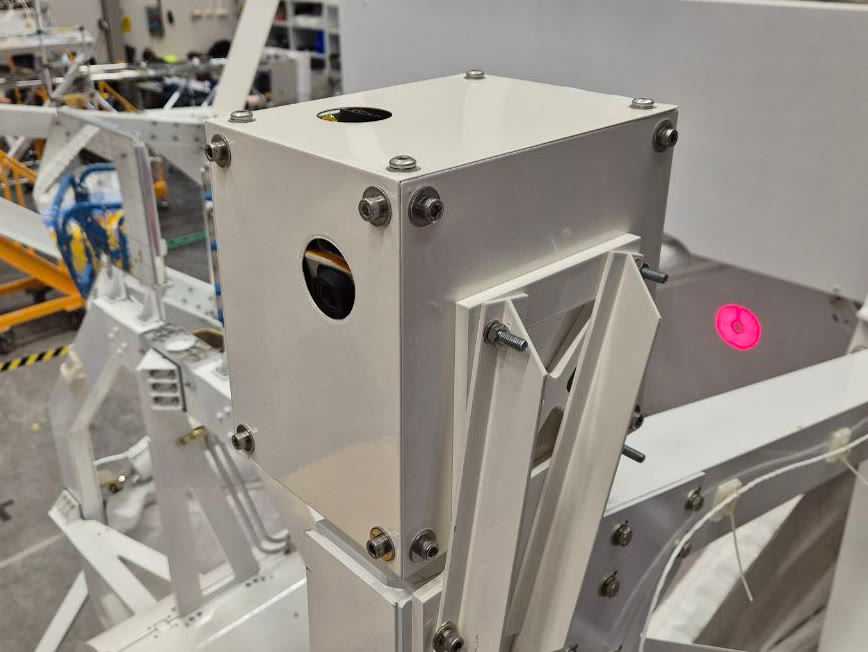
From 2019 I was the project manager of IRIS-2, the second version of the Image Recording Instrument for Sunrise, built for Sunrise III, and in charge of its software. IRIS-2 filmed different phases of the flight in ultra-high definition from several viewpoints.

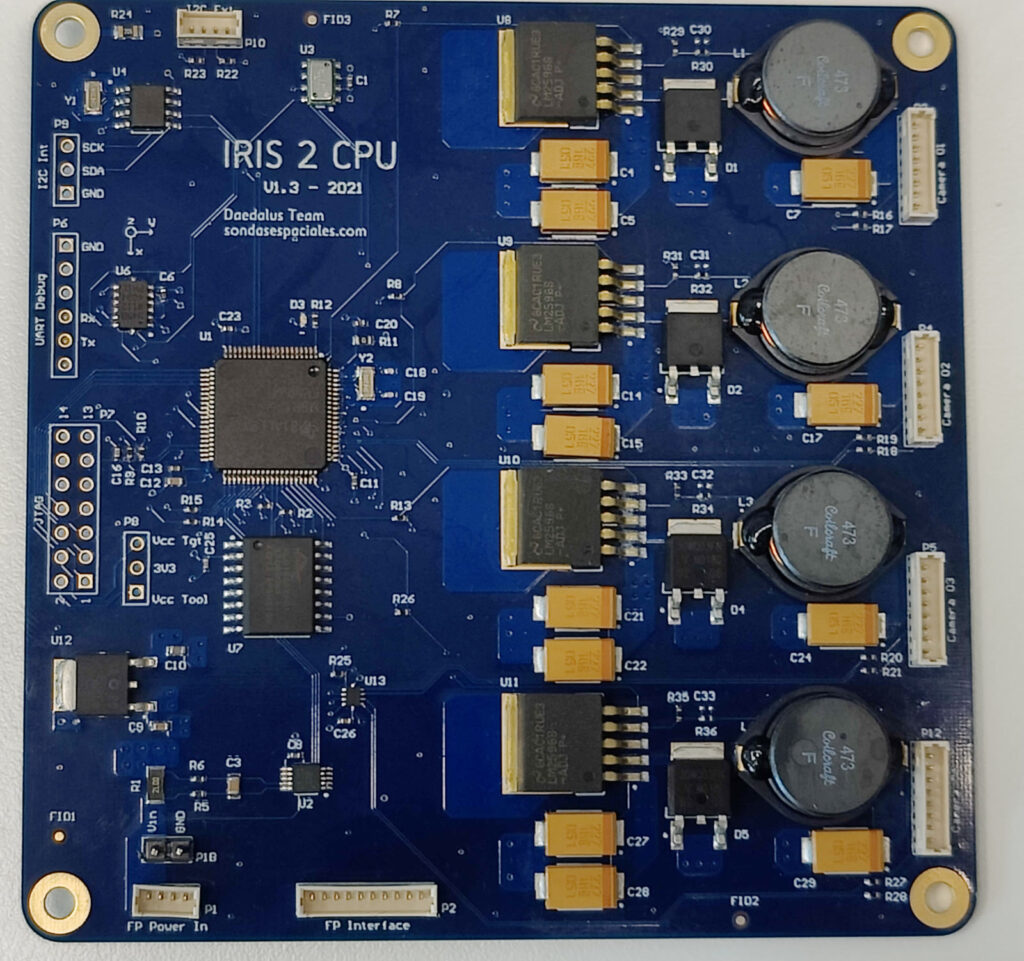
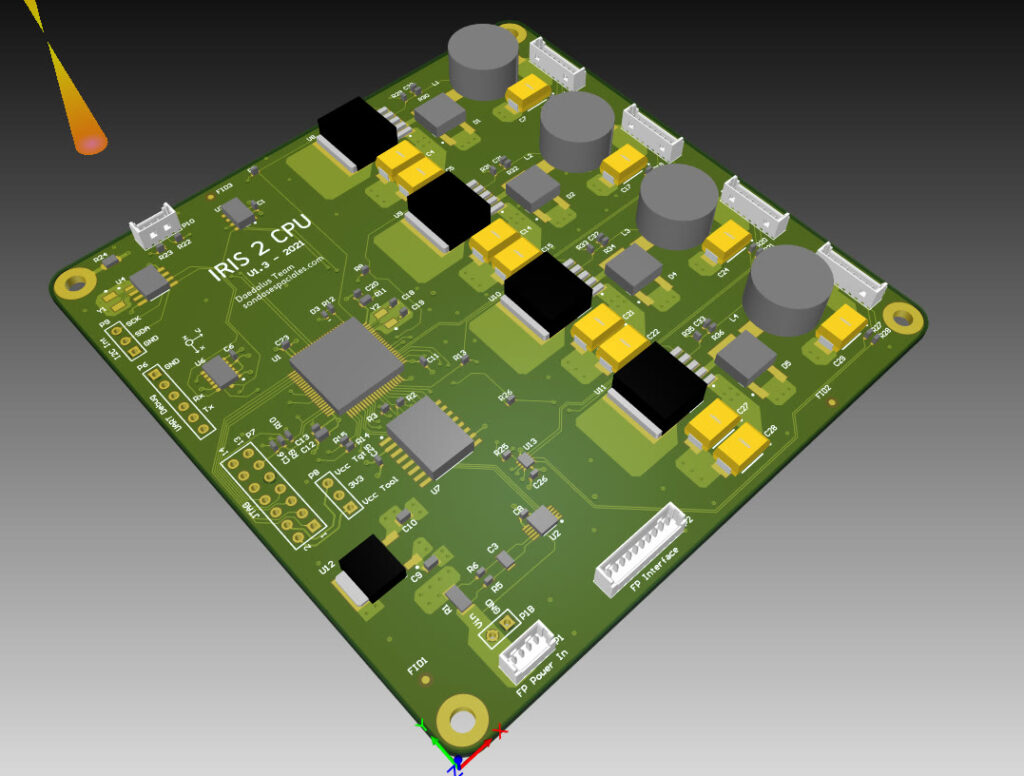
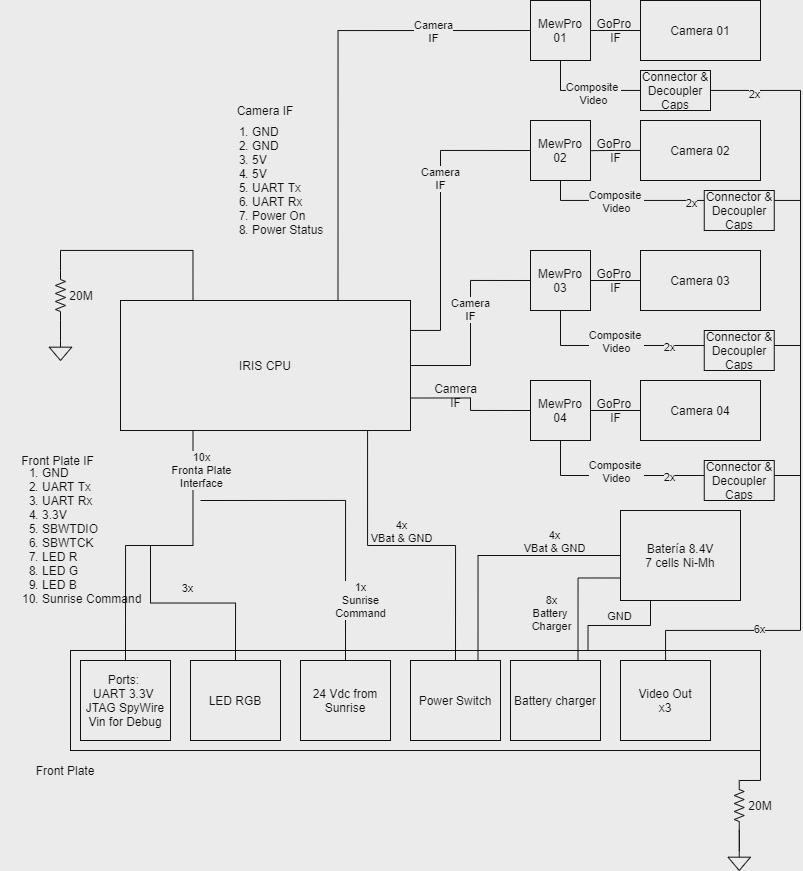
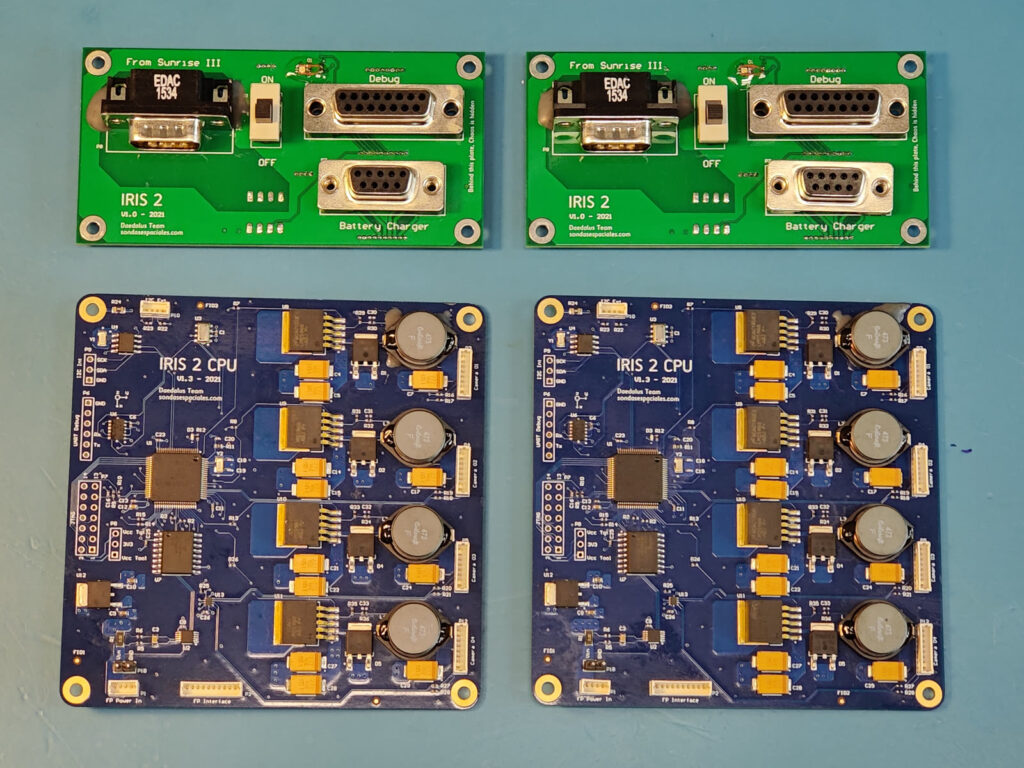
IRIS-2 is a 5 kg camera instrument that we designed and built as a small team of friends: Aitor Conde, David Mayo, Miguel Angel Gomez and me. A central computer based on an MSP430 FRAM microcontroller controls four GoPro HERO4 cameras. The instrument runs on its own battery pack, detects launch and landing on its own, records 4K video during launch, balloon release and landing, and takes time-lapse stills for the rest of the flight.

We released the hardware design (CERN-OHL-W-2.0) and the flight firmware (MIT) as open source on GitHub.

Sunrise III is a balloon-borne solar observatory led by the Max Planck Institute for Solar System Research with international partners. It flew in July 2024, and I am a co-author of the observatory and instruments overview in Solar Physics (2025) [1].
Related publications

[1]
PUB-25-02
A. Korpi-Lagg, A. Gandorfer, S. K. Solanki, …, R. M. García Alarcia, et al.
journalSolar Physics, 2025
pdf bibtex doi mediatum
In July 2024, SUNRISE completed its third successful science flight. The SUNRISE III observatory had been upgraded significantly after the two previous successful flights in 2009 and 2013, to tackle the most recent science challenges concerning the solar atmosphere. Three completely new instruments focus on the small-scale physical processes and their complex interaction from the deepest observable layers in the photosphere up to chromospheric heights. Previously poorly explored spectral regions and lines are exploited to paint a three-dimensional picture of the solar atmosphere with unprecedented completeness and level of detail. The full polarimetric information is captured by all three instruments to reveal the interaction between the magnetic fields and the hydrodynamic processes. Two slit-based spectropolarimeters, the SUNRISE UV Spectropolarimeter and Imager (SUSI) and the SUNRISE Chromospheric Infrared spectro-Polarimeter (SCIP), focus on the near-ultraviolet (309 – 417 nm) and the near-infrared (765 – 855 nm) regions respectively, and the imaging spectropolarimeter Tunable Magnetograph (TUMAG) simultaneously obtains maps of the full field-of-view of 46 $times$ 46 Mm2 in the photosphere and the chromosphere in the visible (525 and 517 nm). The instruments are operated in an orchestrated mode, benefiting from a new Image Stabilization and Light Distribution unit (ISLID), with the Correlating Wavefront Sensor (CWS) providing the autofocus control and an image stability with a root-mean-square value smaller than 0.005”. A new gondola was constructed to significantly improve the telescope pointing stability, required to achieve uninterrupted observations over many hours. SUNRISE III was launched successfully on 10 July 2024, from the Esrange Space Center of the Swedish Space Corporation near Kiruna (Sweden). It reached the landing site between the Mackenzie River and the Great Bear Lake in Canada after a flight duration of 6.5 days. In this paper, we give an overview of the SUNRISE III observatory and its instruments.Keywords: Sun: magnetic fields, Sun: photosphere, Sun: chromosphere, Instrumentation: polarimeters, Stratospheric balloons, High angular resolution